Cellular Communications / RAVEN110
RETIRED ›
This product is not available for new orders. We recommend ordering: RV50.
This product is not available for new orders. We recommend ordering: RV50.
| Services Available | |
|---|---|
| Repair | No |
| Calibration | No |
| Free Support | No |
Overview
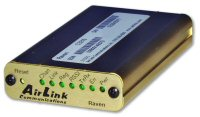
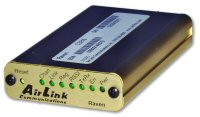
The Raven110 was an Airlink product intended for AT&T digital cellular networks. This full-duplex modem transmitted data to the local cellular tower using either a GPRS or EDGE network. The data was sent from the tower to the base station computer via the Internet. Communicating via Internet provided faster communication rates and eliminates dialing delays and long distance fees.
Images
Compatibility
Note: The following shows notable compatibility information. It is not a comprehensive list of all compatible or incompatible products.
Data Loggers
| Product | Compatible | Note |
|---|---|---|
| 21X (retired) | ||
| CR10 (retired) | ||
| CR1000 (retired) | ||
| CR10X (retired) | ||
| CR200X (retired) | ||
| CR206X (retired) | ||
| CR211X (retired) | ||
| CR216X (retired) | ||
| CR23X (retired) | ||
| CR295X (retired) | ||
| CR3000 (retired) | ||
| CR500 (retired) | ||
| CR5000 (retired) | ||
| CR510 (retired) | ||
| CR800 (retired) | ||
| CR850 (retired) | ||
| CR9000 (retired) | Although the CR9000X and CR9000 are compatible, the Raven110 does not support their fastest communication rates, and is therefore not practical for most of their applications. | |
| CR9000X (retired) | Although the CR9000X and CR9000 are compatible, the Raven110 does not support their fastest communication rates, and is therefore not practical for most of their applications. |
Specifications
| Description | Quadband EDGE (MS class 10) with dualband GPRS (MS-12) fallback |
| EDGE Quadband | 1900/850 MHz and 1800/900 MHz |
| GPRS Dualband | 1900/850 MHz |
| Transmit Frequency | 1850 to 1910 MHz and 824 to 849 MHz |
| Transmit Power |
|
| Receiver Frequency | 1930 to 1990 MHz and 869 to 894 MHz |
| EDGE Throughput | Up to 384 kbps |
| GPRS Throughput | Up to 70 kbp |
| RS-232 Data Rates | 1200 bps to 115.2 kbps |
| Operating Temperature Range | -30° to +70°C (10% duty cycle limit above 60°C) |
| Serial Interface | RS-232 |
Documents
Case Studies
Alfalfa is a thirsty crop. It uses more than 20 percent of all of the......read more
The West Texas Mesonet (WTM) project was initiated by Texas Tech University in 1999 to......read more
Articles and Press Releases
Newsletter Articles
Privacy Policy Update
We've updated our privacy policy. Learn More
Cookie Consent
Update your cookie preferences. Update Cookie Preferences